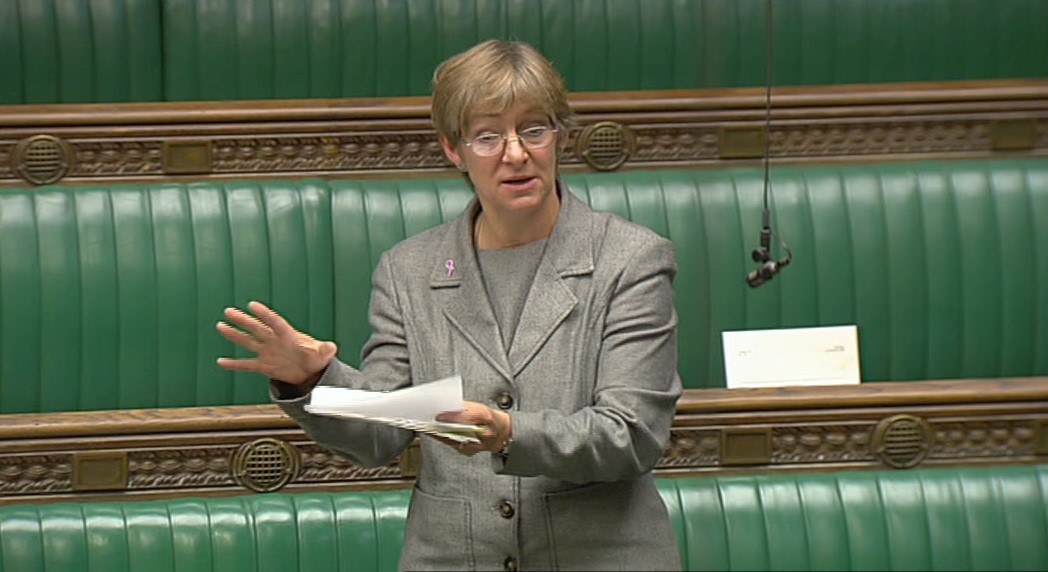
The next in our series on women MPs by the House of Commons Hansard Writing Team.
Alice Mahon (1937-2022) and Rachel Squire (1954-2006) were elected as Labour MPs in the 1987 and 1992 general elections respectively. Mahon secured the marginal seat of Halifax and Squire Dunfermline West. Although different in their views and backgrounds, both were assiduous constituency MPs, had strong views on defence and garnered respect for standing firm by their beliefs.
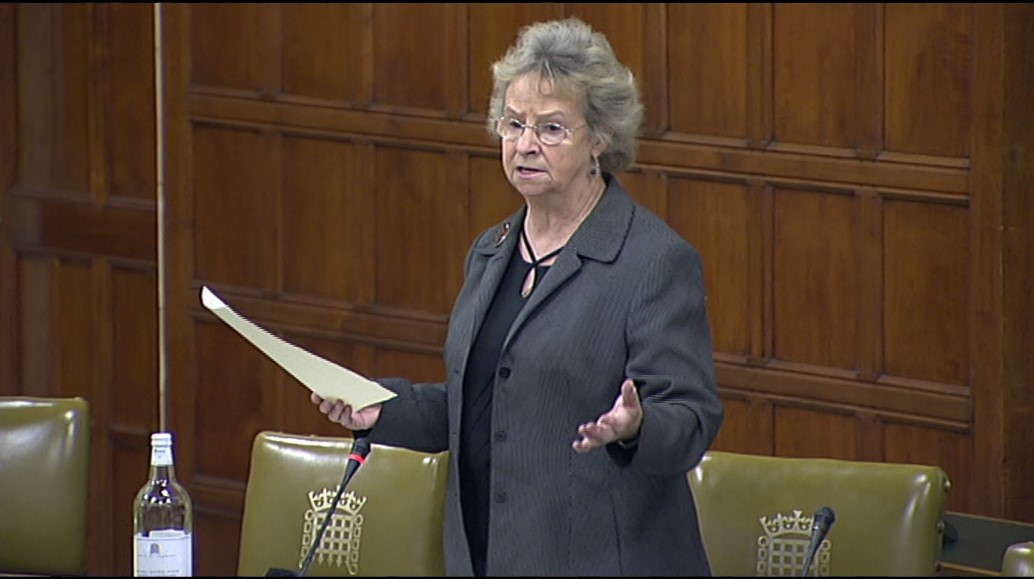
Born in Buttershaw, Bradford, Mahon was the daughter of Thomas Bottomley, a bus driver, and his wife, Edna, who worked in a textile mill in the mornings and a pub at weekends. Mahon left school at 16, taking on work in hotels, offices, factories and as an auxiliary nurse. In 1979, after the birth of her two sons, she graduated from Bradford University as a mature student and lectured in trade union studies. As a member of National Union of Public Employees, she campaigned for equal pay for women and helped the union to establish a women’s committee. She served on Calderdale Council from 1982 to 1987 and was persuaded to stand in the 1987 election by, among others, Tony Benn and Barbara Castle.
On entering Parliament, Mahon said that “the class divide hit me smack in the face”. A consistent Labour rebel, she was never afraid to speak her mind or call out perceived injustices. As she said, “Parliament gives you a voice and I was never afraid to use it.”
Mahon had no ministerial ambitions, preferring to campaign from the back benches on improvements in health and working conditions and to focus on her constituents.
From 1991 to 1997, Mahon served on the Health Committee. In 1997, she briefly served as PPS to Chris Smith, the then Culture Secretary, but had to resign after voting against benefit cuts for single parents. Mahon worked well with Members from all parties: in 1994, she worked with female Tory MPs to set up the all-party group on breast cancer.
Believing it was important to hear a woman’s voice on war, Mahon joined the NATO Parliamentary Assembly from 1992 to 2005. She opposed military action in the first Gulf war, Kosovo, the former Yugoslavia and Iraq, not because, as she once jokingly said, she was a “veteran peacenik”, but because she deemed the use of military power in these instances unjust. She said both her family and her husband, Tony, had a military background. As one of just 11 Labour MPs who had voted against the NATO bombing of Belgrade, she was called to speak as a defence witness at Slobodan Milošević’s trial in 2006.
Mahon decided to leave the Commons at the 2005 election. Uncomfortable with Labour’s structure and policies under Tony Blair, she then resigned from the party in 2009, accusing it of betraying many of the values and principles that had inspired her to join. She remained active in left-wing politics and rejoined the party in 2015 after Jeremy Corbyn became leader. She died in 2022.

Born in Carshalton, Surrey, Squire was raised by her mother, Louise Binder, and stepfather, Percy Garfield Squire. She studied archaeology and anthropology at Durham University and social work at Birmingham University. Her first job was with Birmingham City Council as a social worker, and, in 1981-82, she became a full-time NUPE officer in Liverpool. However, it was in Scotland where she made her political career, becoming the only woman union representative on Labour’s Scottish Executive Committee.
In 1986, Squire became chair of the Linlithgow constituency Labour party. She was described by Tam Dalyell, Linlithgow’s MP for 22 years, as “among the best”. In 1992, she was asked to stand for Dunfermline West after the sitting MP, Dick Douglas, defected to the SNP, which, as Dalyell said, “was quite an achievement for an English woman in the vituperatively Scottish nationalistic atmosphere of the time”. She said of her decision to stand, “I used to get angry at how difficult it was for women in safe Labour seats, so…I felt I must take up the challenge”. She served as MP for Dunfermline West until 2005, and for Dunfermline and West Fife from 2005 until her death.
Almost straight away, Squire was nominated to serve on the Procedure Committee, which she did until 1997. Between 1997 and 1999, she worked on the Modernisation Committee, which, among other things, changed the House’s sitting hours.
Squire was a fierce campaigner for her constituency, securing regeneration funds and the future of the Longannet coal mine. She campaigned on behalf of her local naval base at Rosyth, raising its profile in Parliament whenever the occasion arose. On the decision to privatise Rosyth, which started when Babcock International acquired the site in 1987, she told the House: “Privatisation will cause more insecurity…will not bring jobs or value for money…will not advance opportunities in competition and… will not improve defence or freedom.” She became an expert on defence, serving on the Defence Committee, chairing the PLP backbench defence group, and sitting at NATO’s Parliamentary Assembly.
She was a PPS to Treasury and Education Ministers during the 1997 Parliament. Her private Member’s Bill “to remove the barriers created by copyright law to visually impaired people’s access to books” became the Copyright (Visually Impaired Persons) Act 2002.
Squire was diagnosed with a brain tumour in 1993 and had a stroke soon after the 2005 election. After her death seven months later, her constituency neighbour Gordon Brown paid tribute to her as “a great servant of the people…who showed quiet concern and compassion for others, even amid her own suffering.”
Hansard Writing Team
Bibliography
History of Parliament Trust interview with Alice Mahon: https://sounds.bl.uk/sounds/alice-mahon-interviewed-by-mark-wilson-1001086979610×000002
Bradford College: https://175heroes.bradfordcollege.ac.uk/alice%20_mahon.html
BBC News, Alice Mahon: https://news.bbc.co.uk/1/hi/uk_politics/341946.stm
Rachel Squire obituary: https://web.archive.org/web/20121111172316/http://www.independent.co.uk/news/obituaries/rachel-squire-521903.html
Statement on Defence Estimates: https://api.parliament.uk/historic-hansard/commons/1993/oct/18/statement-on-the-defence-estimates#S6CVO230P0_19931018-HOC
Copyright(Visually Impaired Persons)Bill: https://hansard.parliament.uk/commons/2002-03-15/debates/b29fae9d-c706-4174-a468-254dfe77df9f/copyright(VisuallyImpairedPerson)
Rachel Squire obituary: https://www.theguardian.com/politics/2006/jan/06/labour.uk1
 UK Vote 100: Looking forward to the centenary of Equal Franchise in 2028 in the UK Parliament