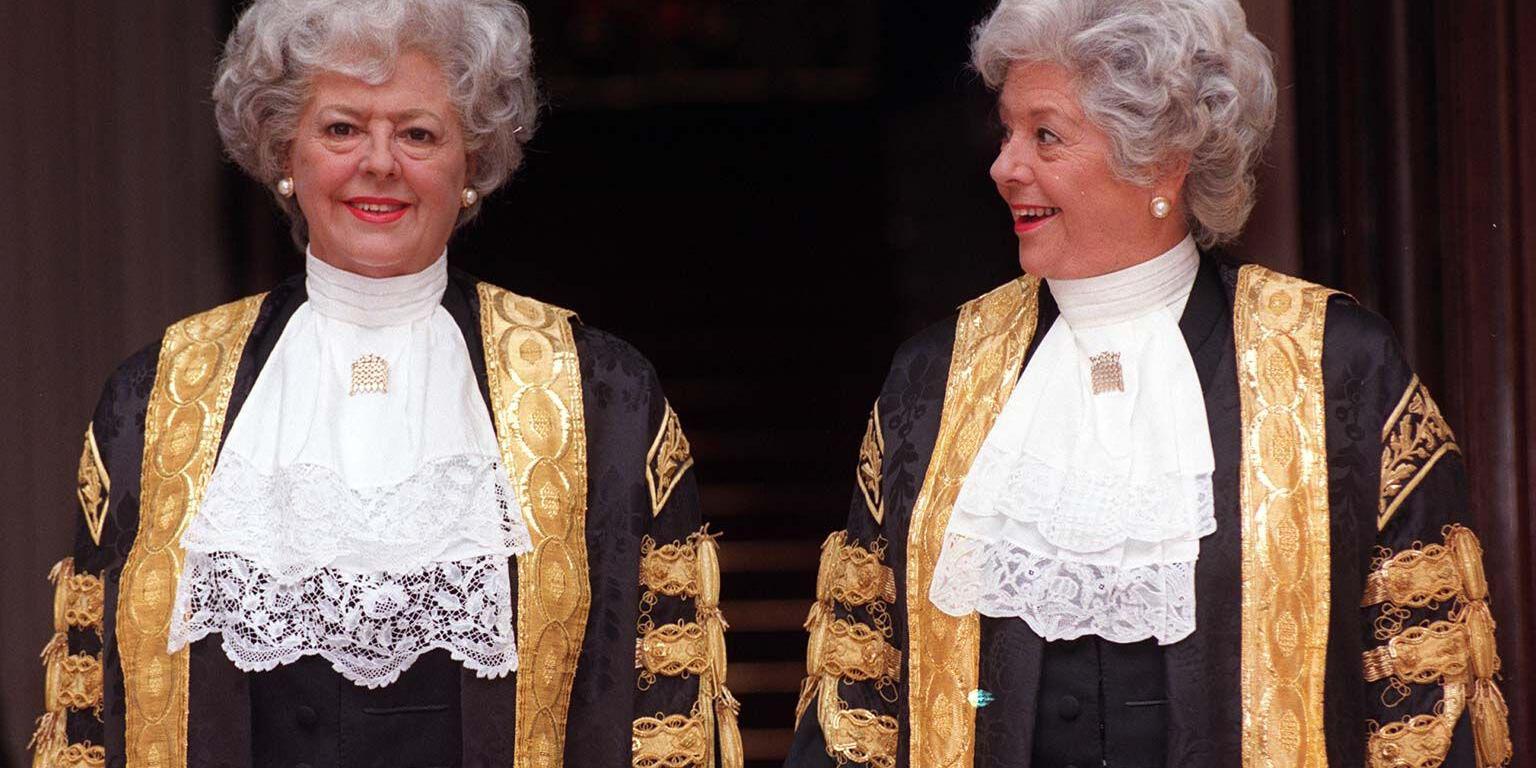
Today we remember Betty Boothroyd, who died in February 2023. This is the last in our series on women MPs by the House of Commons Hansard Writing Team.
In 1992, defying 700 years of parliamentary tradition, Betty Boothroyd (1829-2023) became the first—and so far only—woman to be elected Speaker of the House of Commons.
Born in Dewsbury, the only child of textile workers Mary and Archie, Boothroyd watched her parents dip in and out of insecure work, understanding all too well the challenges of growing up poor. She was educated at council schools and went on to study at Dewsbury College of Commerce and Art. Her parents were politically minded and keen members of both the Labour party and their trade union. Described as a “fun-loving teenager”, Boothroyd was serious about her politics. She attended Labour women’s section meetings with her mother before joining the party’s youth league at 16 and, following a brief stint as a chorus-line dancer with the Tiller Girls, she decided to enter politics. She worked as an assistant to Labour MPs, including Barbara Castle, and, in 1960-62, became a legislative assistant to a US Congressman in Washington.
In 1965, she was elected to a seat on Hammersmith Borough Council. She tried and failed to secure a parliamentary seat four times—in South East Leicester in 1957, Peterborough in 1959, Nelson and Colne in 1968 and Rossendale in 1970. Eventually, in 1973, she secured the seat of West Bromwich, becoming its first female MP.
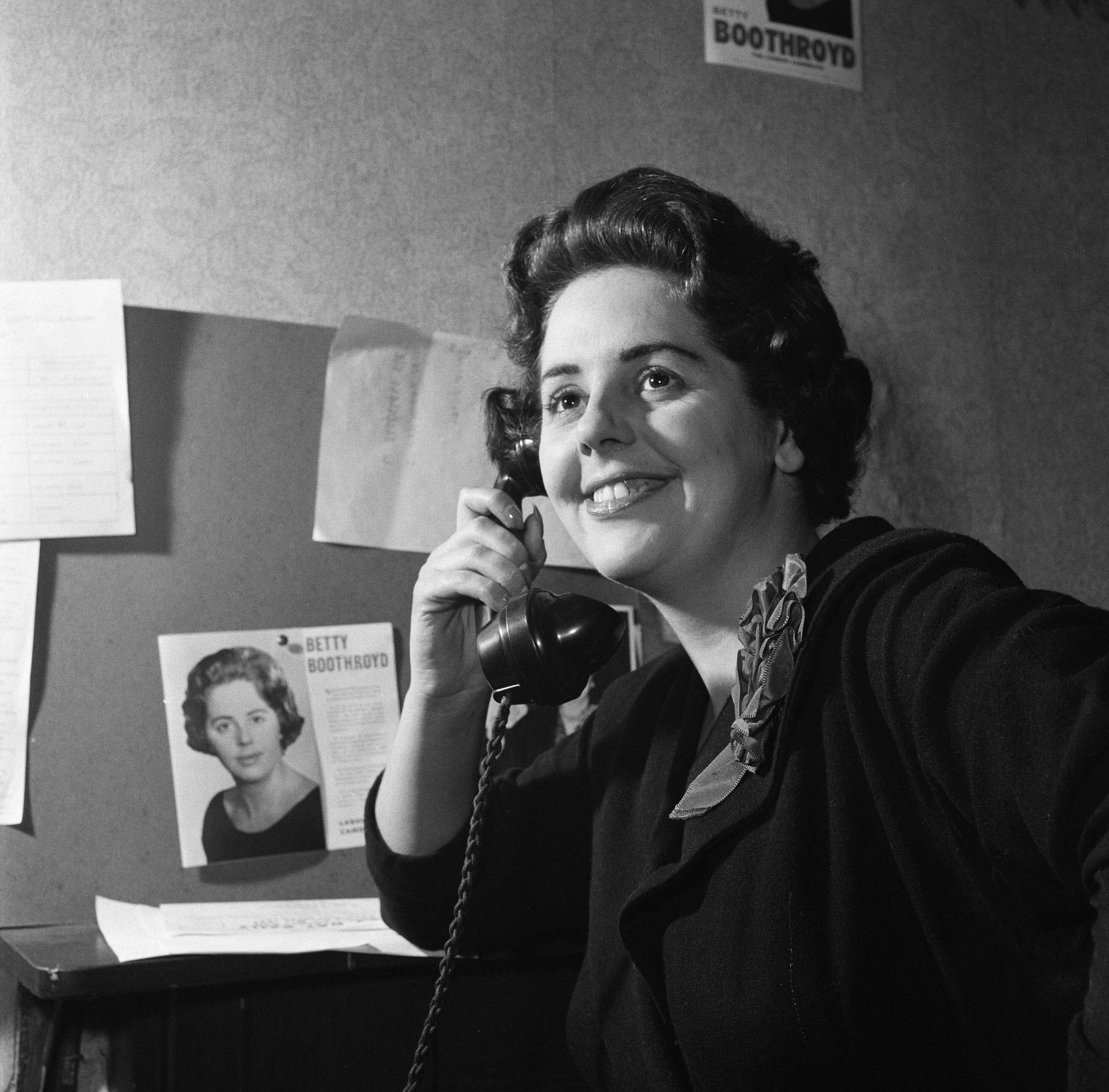
Boothroyd’s maiden speech differed from many that had gone before. She defied the convention that maiden speeches should be uncontroversial and fairly brief and delivered instead a hard-hitting and critical speech. She told the House that she spoke for “ordinary working people…my kind of folk” who felt that society was “unjust and unfair” and that there was “one law for the well off and another for those who are not so well off.” She asked a series of questions of the Government, culminating with these words of reproach: “The Government were not elected constantly to explain away the problems of world conditions, world prices or the actions of primary producers. They were elected to find the answers”. She said that unless practical steps were taken to alleviate the injustices of this two-tier society, “people everywhere will feel badly about this Government which were elected on false promises”.
Boothroyd spoke frequently about inflation and consumer protection—championing single and older people, she said, “I call it ‘consumer protection’ rather than ‘housewives’ protection’”—and introduced two unsuccessful private Members’ Bills that sought to control prices. After serving as an assistant Government Whip in 1974 and as a member of the European Parliament, she became a member of the Foreign Affairs Committee and of the Speaker’s Panel of Chairmen. She also served on the House of Commons Commission between 1983 and 1987, which she later chaired as Speaker, and on Labour’s national executive committee between 1981 and 1987.
In 1987, when Boothroyd took up the role of Deputy Speaker, only one other woman—Betty Harvie Anderson—had done so before her in British history. Five years later, standing for Speaker, Boothroyd told colleagues: “elect me for what I am and not for what I was born.” This was the first contested election for Speaker since 1951, and more than 70 Conservative MPs chose to support her. As Speaker, she defended Parliament’s status as the primary forum for holding the Executive to account, strictly policing the length of questions and answers, deploring Ministers’ announcement of policy away from the Commons and resisting changes to the House’s sitting hours that might hamper effective scrutiny. Known for her wit, she once remarked, jokingly scolding an MP who had challenged the parliamentary rulebook, “To err is human, but Erskine May is divine.” Boothroyd resigned as an MP when she stood down as Speaker in 2000.
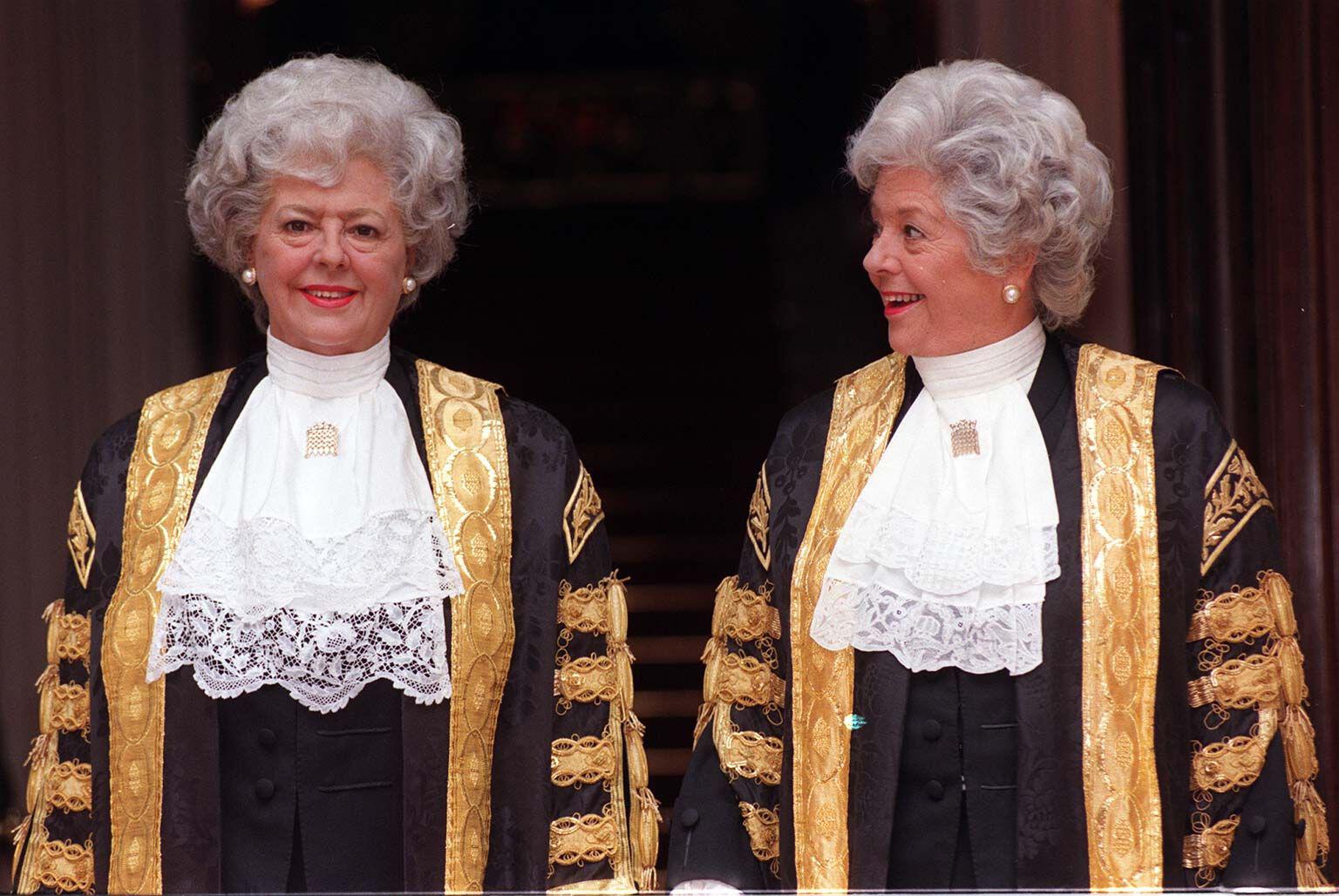
In 2001, Boothroyd was made a life peer, taking as her title Baroness Boothroyd of Sandwell. Honours and honorary degrees were bestowed on her from a wide range of universities including Oxford, Cambridge, London and St Andrews, but her chancellorship of the Open University was perhaps closest to her heart, because of her support for, and belief in, the universal right to adult education. In her maiden speech in the Lords, she said: “Had it been allowed to go under in its early years we would have lost an academic institution that has pioneered new ways of higher education, stimulated thousands of people to become learners and which is admired and emulated in many countries. We would have been denied a university that has transformed the lives of 250,000 mature students—people from all walks of life and many without formal educational qualifications—who have won degrees.”
As Mr Speaker said on her death, “Betty was one of a kind. She was not only the first woman Speaker, but a force to be reckoned with.” It feels appropriate to end our blog series, written by Hansard staff, with the profile of an MP who was, like us, a servant of the House. It’s been an honour to bring so many women’s stories to this blog’s readership.
Hansard Writing Team
The Hansard Writing Team began a research project on women MPs in 2016; find out how it began in Women MPs, 1918-1997. They started this blog series in 2020 with Constance Markievicz and Nancy Astor, and 64 blogs later – a huge achievement – have ended here with Betty Boothroyd. The blog series includes survey articles of all the women elected before 1997 – find out more here:
- The First Women MPs, 1918-1931
- Women MPs, 1931-1945
- Women MPs, 1945-1955
- Women MPs, 1955-1964
- Women MPs 1964-1974
- Women MPs 1975-1986
- Women MPs 1987-1996
The blog series also provides in-depth profiles of women elected and now deceased, including figures such as Barbara Castle, Margaret Thatcher and Shirley Williams. You can browse the whole series or search the website for individual names. Each blogpost includes at least one image of the woman featured, many drawn from the Parliamentary Archives or Parliamentary Art Collection, or stills of them speaking in Parliament. We are grateful for ongoing support from staff of the Parliamentary Archives and Parliament’s Heritage Collections team. We hope the series is a useful resource for everyone as we look forward to the centenary of equal franchise in 2028.
Links:
Tributes to Baroness Boothroyd: https://Hansard.parliament.uk/Commons/2023-02-28/debates/4CF7D8C-7A9D-487A-A0BF-41C271E59B8A/TributesToBaronessBoothroyd
Boothroyd’s maiden speech: https://hansard.parliament.uk/commons/1973-07-18/debates/16eb3998-4418-4584-9db9-7881774b4a50/inflation
Unit Pricing Bill – Hansard: https://Hansard.parliament.uk/commons/1973-12-12/debates/57e44302-faaf-42b3-9557-4b2902581ee4/UnitPricingBill
Betty Harvie Anderson Vote 100 blog: https://ukvote100.org/2022/01/24/judith-hart-and-betty-harvie-anderson
Election Of Speaker – Hansard: https://hansard.parliament.uk/commons/1992-04027/debates/87471e48-8220-4170-a-9cc-65569e032c35/ElectionOfSpeaker
Baroness Boothroyd maiden speech: https://hansard.parliament.uk/lords/2001-04-25/debates/6a81095c-43eb-48e2-b57f-785526bc72d9/LearningSociety#contribution-a7b7a1f3-e58b-4eec-9a76-7d5edb09efcb
The Guardian obituary: https://www.theguardian.com/politics/2023/feb/27/lady-betty-boothroyd-obituary
 UK Vote 100: Looking forward to the centenary of Equal Franchise in 2028 in the UK Parliament